

Proton therapy is a form of external-beam radiotherapy that uses proton particles rather than conventional X-ray (photon) beams. Its main potential advantage is that the radiation dose can be planned to reduce exposure beyond a tumour, helping spare some surrounding normal tissues. But it is not suitable for every cancer and is not automatically more effective than modern photon radiotherapy. Doctors compare actual treatment plans before recommending it.
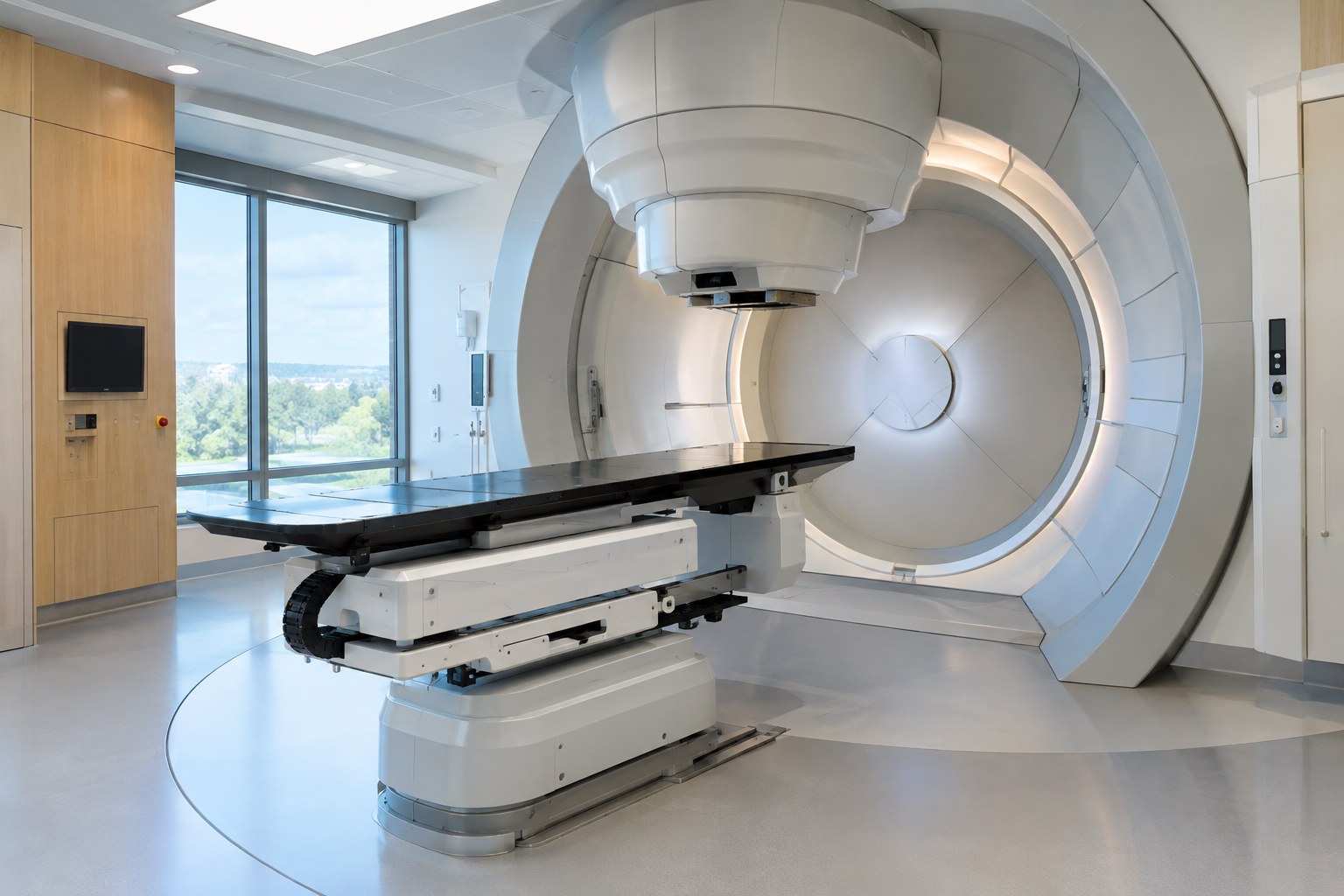
What Is Proton Therapy for Cancer?
Proton beam therapy is a specialised radiation treatment. It uses a machine to direct a carefully calculated beam of protons at a defined treatment area. Like other radiotherapy, it aims to damage cancer cells in the area treated. Proton therapy is not surgery, chemotherapy or a medicine that travels through the whole body.
How Does Proton Beam Therapy Work?
Why do protons behave differently from X-rays?
Photon beams deposit radiation as they pass through the body and continue beyond the target. Protons release much of their energy near the end of their planned range, often described as the Bragg peak. This can help reduce the radiation dose to some healthy tissues beyond the tumour. Protons still expose tissues along their entrance path to radiation, and uncertainty in range, movement or anatomy can affect planning.
How is the treatment planned?
Radiation oncology teams use imaging, computer modelling, positioning devices and quality checks to design a dose distribution. For some areas, they account for breathing and changes in body position. The important question is whether the proton plan delivers a meaningful benefit compared with an appropriate modern photon plan for that patient.
What Are the Potential Benefits of Proton Therapy?
- Lower dose to selected healthy structures: this may matter when the tumour is near sensitive organs.
- Potential reduction in some late effects: particularly important in certain paediatric cancers and selected locations, although the size of benefit varies.
- An option for carefully selected complex cases: specialist teams may consider it when dose constraints are difficult with other techniques.
These are potential advantages, not guarantees of fewer side effects or better survival. Proton therapy must be evaluated for the actual diagnosis and treatment plan.
Which Cancer Patients May Be Considered for Proton Therapy?
Examples can include selected childhood cancers and certain tumours near the skull base, brain, spine, head and neck, or other critical structures. Use in other cancers depends on clinical evidence, the proposed radiation plan and availability. Having a tumour in one of these areas does not automatically mean proton therapy is the right choice.
If treatment decisions are complicated, see advanced cancer treatment options and multidisciplinary cancer consultation for the broader clinical context.
What Are the Limitations of Proton Therapy?
- Not all cancers benefit from the different dose distribution.
- Clinical evidence is stronger for some indications than others.
- Specialised centres and equipment can make treatment less accessible and more costly.
- Changes in anatomy and tumour movement can require careful adaptation and monitoring.
- Side effects and late complications can still occur.
Is Proton Therapy Better Than Traditional Radiotherapy?
Not for everyone. Modern photon approaches such as IMRT and VMAT can deliver highly conformal radiotherapy. A proton plan may reduce dose to certain healthy tissues, but that does not automatically translate into better cancer control, longer survival or fewer complications in every clinical setting. The radiation oncologist should compare realistic options, risks and available evidence.
| Factor | Proton therapy | Photon radiotherapy |
|---|---|---|
| Radiation | Proton particles | High-energy X-rays |
| Dose beyond the target | Can be markedly reduced with suitable planning | Exit dose generally continues beyond the target |
| Suitability | Selected patients and indications | Broad range of indications |
| Possible side effects | Yes, depending on the site and dose | Yes, depending on the site and dose |
| Automatically more effective? | No | No |
For a broader look at different radiation approaches, see AGH’s precision radiotherapy and SBRT guide.
What Happens Before, During and After Proton Therapy?
Before: specialist evaluation and planning scans
Your medical team reviews scans, pathology, previous radiation and overall health, then plans the beam arrangement. Masks or body moulds may be used to keep positioning consistent.
During: radiation delivered in scheduled sessions
The treatment beam itself is not normally felt. You may hear equipment and spend time being positioned before each session. The number and length of sessions depend on your plan.
After: monitoring for response and side effects
Follow-up can include clinical review and imaging. Scans and symptoms require specialist interpretation; radiotherapy response may not be immediately apparent.
What Side Effects Can Proton Therapy Cause?
Side effects depend largely on the location, dose, nearby organs and other treatments. They may include fatigue, skin changes, hair loss in the treated area or site-specific reactions. Some late effects can appear months or years later. Although reducing radiation exposure to healthy tissue may lower certain risks, proton therapy does not eliminate complications.
Can Proton Therapy Treat Stage 4 or Metastatic Cancer?
Sometimes local radiation, including proton treatment in selected cases, may be considered for specific sites in advanced cancer. It does not treat all cancer cells throughout the body. The role of radiation should be discussed alongside medicines, symptom control and the overall oncology plan. Review stage 4 cancer treatment options for broader information.
What Should You Check Before Considering Proton Therapy Overseas?
Ask whether the hospital has evidence and specialist experience for your particular diagnosis, how treatment plans are reviewed, what the estimated total treatment and travel costs cover, and who manages complications after you return home. Choose a centre based on clinical suitability and continuity of care, not the advertised machine alone. AGH’s guide to comparing overseas cancer hospitals and cancer treatment in China guide offer further context.
Seven Questions to Ask a Radiation Oncologist
- Why might proton therapy be suitable for my diagnosis?
- Can you compare the proton plan with a modern photon plan?
- Which organs might receive less radiation, and what benefit is expected?
- What are the short-term and long-term risks?
- How many sessions and follow-up visits are needed?
- Would travel delay treatment or complicate follow-up?
- What other evidence-based options should I consider?
How AGH Medical Can Support Your Next Step
AGH Medical is a patient-support and medical-coordination service, not a hospital or proton-therapy provider. AGH does not prescribe radiation, determine treatment suitability or promise outcomes. If you have received different treatment recommendations, you can learn about seeking a cancer second opinion or contact AGH Medical about organising your reports for an appropriate specialist review.
Frequently Asked Questions About Proton Therapy
Does proton therapy cure cancer?
Outcomes depend on the cancer, stage and treatment goal. No treatment should be presented as a guaranteed cure.
Is proton therapy painful?
The radiation beam itself is generally not felt, although positioning can be uncomfortable and side effects can develop later.
Does proton therapy have fewer side effects?
It may reduce certain risks in selected situations, but not for every patient or every side effect.
Is proton therapy the same as CyberKnife?
No. Proton therapy uses proton particles, while CyberKnife is a robotic system that delivers photon-based stereotactic radiotherapy.
Is proton therapy suitable for all brain tumours?
No. Suitability depends on diagnosis, location, anatomy, treatment intent and clinical evidence.
Can proton therapy replace chemotherapy?
They are different treatments. Depending on the cancer, medicines may still be needed alongside or instead of local radiation.
Should I get a second opinion before travelling for proton therapy?
A specialist review can clarify whether a proton plan is likely to provide meaningful advantages and whether travel is appropriate.
Medical Sources
- Cancer Research UK: Proton Beam Therapy
- Macmillan Cancer Support: Proton Beam Therapy
- National Cancer Institute: External Beam Radiation Therapy
How to Decide Whether Proton Therapy Deserves a Second Opinion
Ask your radiation oncologist whether a proton treatment plan offers a meaningful advantage over a modern photon plan for your cancer. Relevant factors include tumour location, nearby sensitive organs, prior radiation, available evidence, practical access and cost. Our precision radiotherapy and SBRT guide explains other focused radiation approaches; our advanced cancer treatment overview puts local radiation in the wider care plan.
If you are considering options beyond Malaysia, read our cancer treatment in China guide. Before making travel arrangements, you can request a cancer second opinion to discuss your imaging, pathology and previous treatment with an appropriate specialist. AGH Medical coordinates reviews and hospital discussions; it does not prescribe or deliver radiation treatment.
Medical disclaimer: This article is for general education and does not replace professional medical advice, diagnosis or treatment. Always consult a qualified oncology professional regarding treatment suitability, risks and individual care.
