

Proton therapy and conventional photon radiotherapy both treat cancer with carefully planned radiation. Their main difference is the kind of beam used and how radiation dose is distributed inside the body. Proton treatment can reduce radiation beyond the target in selected plans, but it is not automatically better at controlling cancer or safer for every patient. A radiation oncologist should compare the actual proposed plans, potential side effects and evidence for your diagnosis.
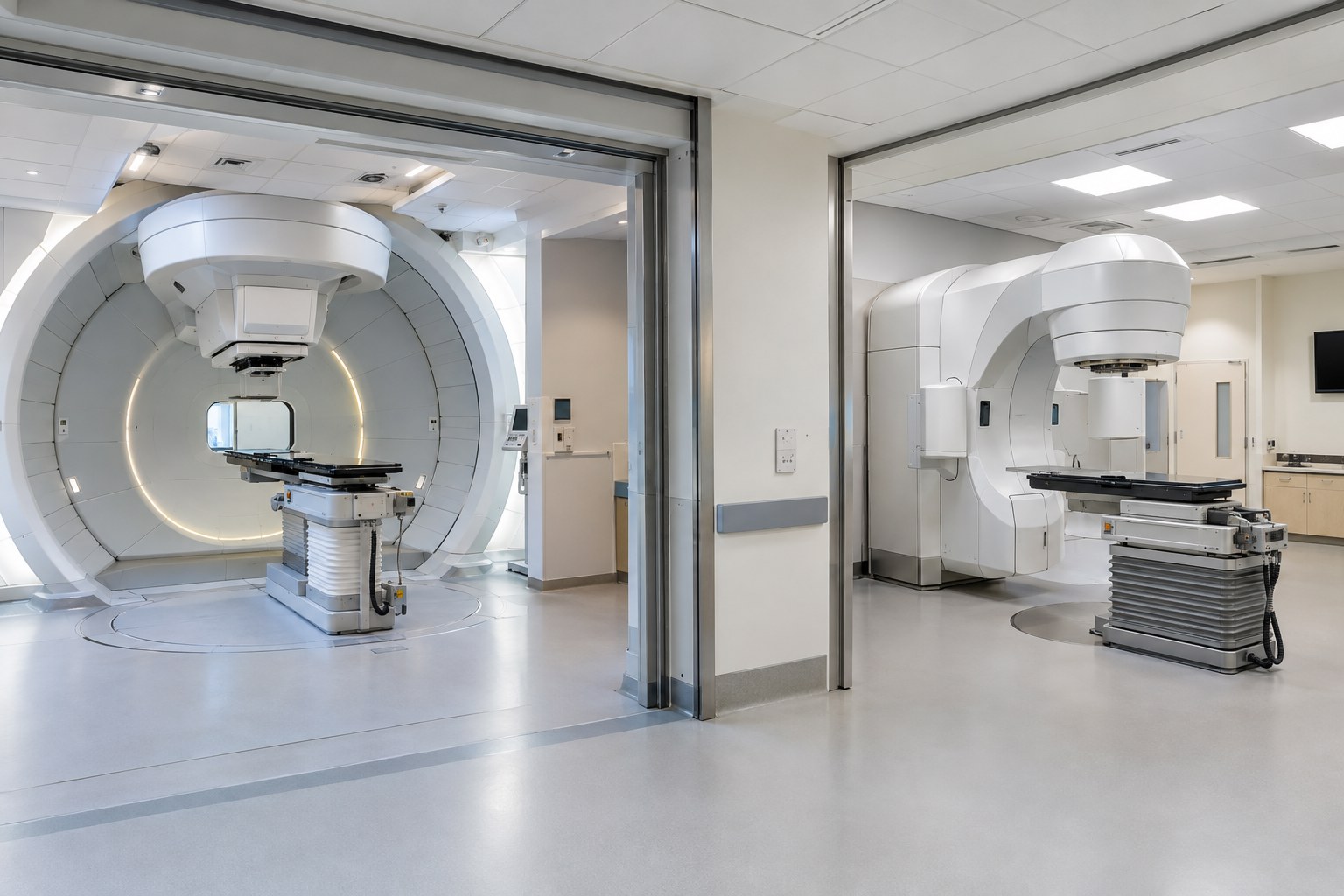
Proton Therapy vs Traditional Radiotherapy: Key Differences
| Consideration | Proton beam therapy | Photon radiotherapy |
|---|---|---|
| Radiation type | Charged proton particles | High-energy X-rays (photons) |
| Where dose is deposited | Dose can be concentrated within a planned range with relatively little beyond it | Dose is delivered along paths entering and exiting the body |
| Normal tissue exposure | May lower exposure to certain organs in selected plans | Modern planning techniques can also spare normal tissues effectively |
| Where used | Selected cancers and complex anatomical situations | Broad range of cancers and treatment situations |
| Availability | Requires specialised centres | More widely available |
| Guaranteed better outcome? | No | No |
“Traditional” does not mean outdated: modern photon techniques include IMRT, VMAT and image-guided radiotherapy. To understand how different radiation approaches are planned, see AGH’s guide to precision radiotherapy and SBRT. These techniques are not interchangeable with proton therapy, and a radiation oncologist should explain which approach fits your case.
Why Might Protons Reduce Radiation Exposure Beyond a Tumour?
Protons release much of their energy near the end of their range, a property commonly called the Bragg peak. Doctors can use this physical property to shape the dose. Photon beams pass through and beyond targets, though modern multi-angle planning carefully controls exposure. Proton beams still deliver entrance dose, and movement or anatomical changes can introduce uncertainty. The clinical advantage depends on the actual anatomy and radiation plan.
Does a Lower Dose to Healthy Tissue Mean Fewer Side Effects?
Sometimes it may, but not automatically. Side effects depend on the organs involved, treatment dose, fractionation, other medicines and previous radiation. Lower planned dose to particular healthy tissues is meaningful only if it improves an outcome important to the patient, such as lowering a relevant complication risk. Ask whether this benefit is supported by clinical evidence for your diagnosis.
Which Patients Might Benefit More From Proton Therapy?
Selected childhood cancers
Radiation exposure to developing tissues and potential late effects are especially important in children. Proton treatment may be considered for selected paediatric cases following specialist assessment.
Tumours close to sensitive structures
Some tumours near the brain, spinal cord, skull base or other critical organs may warrant a comparison of proton and photon plans. A tumour’s location alone does not establish suitability.
Patients who have previously received radiation
In selected re-irradiation cases, reducing dose to previously treated normal structures may be valuable. However, cumulative tissue injury remains a major concern, and protons are not a universally safe workaround.
When Might Modern Photon Radiotherapy Be Just as Appropriate?
Many cancer sites can be treated effectively with modern photon techniques, including highly conformal IMRT and VMAT. Photon treatment may be appropriate where it achieves acceptable coverage and healthy tissue protection, has stronger outcome evidence for the indication, or can begin without a clinically significant delay. Device choice should not replace individualized oncology planning.
Is Proton Therapy More Effective for Cancer Survival?
Not as a universal statement. Evidence varies by tumour type and treatment setting. Physical differences in dose distribution should not be confused with proven improvements in tumour control or survival. Ask the radiation oncologist for results relevant to your exact cancer and stage, and whether randomized or comparative studies support the recommendation.
Are Proton and Photon Treatment Sessions Different?
Both normally begin with a consultation, simulation scans, a radiation plan and safety checks. Both require accurate positioning during each session. The number of sessions is defined by the prescribed regimen, not simply by whether protons or photons are used. Some plans require repeated imaging or adaptation when the anatomy changes.
What About Cost, Travel and Follow-Up?
Proton centres require specialised equipment, which can affect availability and total cost. Patients considering travelling abroad should ask for an itemized estimate covering consultation, imaging, planning, treatment, accommodation, potential complications and follow-up. More importantly, confirm whether travel would delay necessary treatment and who will manage subsequent symptoms after returning home. The AGH guide to comparing overseas cancer hospitals explains further practical checks. If you are exploring an assessment in China, read cancer treatment in China for Malaysian patients for broader considerations about specialist evaluation, cost and follow-up.
How to Compare Two Radiotherapy Recommendations
- Ask both teams to state the treatment goal clearly.
- Confirm that they reviewed the same recent scans, pathology and prior radiation records.
- Ask how each plan covers the tumour and which sensitive organs are protected.
- Request an explanation of expected benefits and clinically important risks.
- Ask whether the evidence differs for your cancer type or stage.
- Consider treatment timing, overall travel burden and continuity of care.
- Clarify which team will interpret scans and manage late side effects.
People considering radiotherapy alongside other treatments may find AGH’s precision radiotherapy and SBRT guide helpful. For complex cases, see advanced cancer treatment options and the multidisciplinary consultation guide.
Should You Seek a Second Opinion Before Choosing?
A second opinion may be useful if you have different recommendations, a tumour close to critical structures, previous radiotherapy or questions about possible overseas care. The aim is not to select the most advanced-looking machine, but to understand which approach is appropriate for you. Learn when to seek a cancer second opinion and how an online cancer second opinion works if you want to ask about an initial medical-record review.
How AGH Medical Can Support Your Decision
AGH Medical is a medical coordination and patient-support service, not a hospital or radiotherapy provider. It does not prescribe treatment or determine who should receive proton therapy. If you wish to explore specialist reviews or overseas options, you can contact AGH Medical to discuss organizing relevant reports and possible coordination steps.
Frequently Asked Questions
Is proton therapy better than IMRT?
Not always. A comparison of actual treatment plans and relevant clinical evidence is needed for your diagnosis.
Does proton therapy cause fewer side effects?
It may reduce certain exposures and risks in selected cases, but side effects can still occur.
Is proton therapy suitable for every tumour near the brain?
No. Suitability depends on pathology, size, location, treatment goal and specialist assessment.
Is photon radiotherapy outdated?
No. Modern photon techniques such as IMRT and VMAT provide highly precise treatment for many cancers.
Can proton therapy treat metastatic cancer?
Selected metastatic sites may sometimes be considered for local radiation, but it does not treat cancer throughout the body.
Will proton therapy always take fewer sessions?
No. The schedule depends on the prescribed radiation regimen and clinical circumstances.
Does every patient need to travel overseas for proton therapy?
No. Whether to travel depends on medical suitability, centre availability and the patient’s broader circumstances.
Further Reading and Disclaimer
Read the Cancer Research UK guide to proton beam therapy and the National Cancer Institute’s radiation therapy overview.
Medical disclaimer: This article provides general educational information only and does not replace medical advice, diagnosis or treatment. Treatment selection and individual risks must be assessed by qualified oncology specialists.
